
You do not really know how good you are until it is timed
Learning at your own pace is comfortable, and comfort is the problem. A deadline and other people building the same thing tells you more in a weekend than a month of videos.
How it works
The idea, plainly
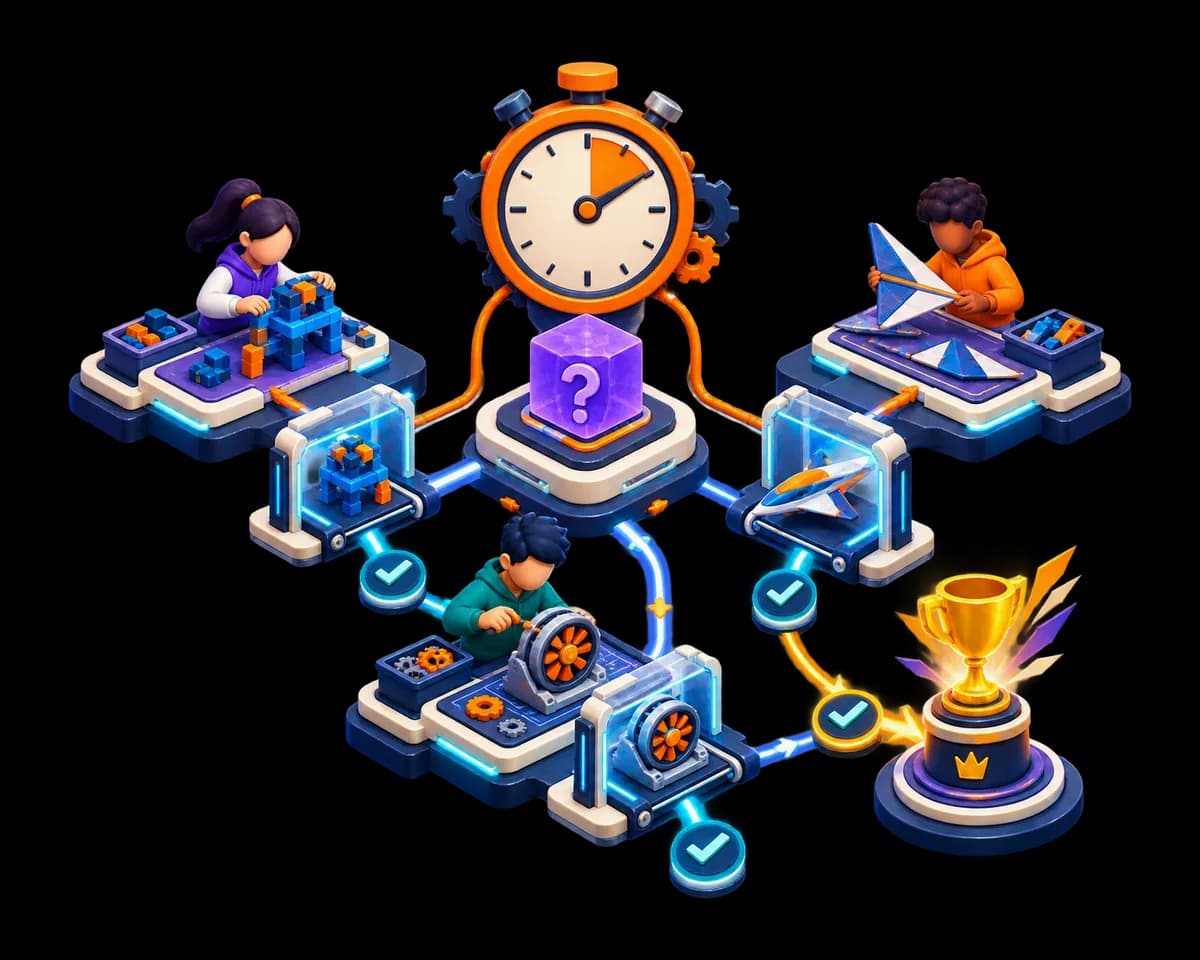
A short brief, a fixed deadline, and everybody's work visible at the end. The point is not winning. It is finding out where you actually are.
A real brief, on the clock
One problem, a couple of days, and something that has to work at the end. The constraint is what makes it useful.
You see everyone's answer
The best part of a contest is reading how other people solved it. You learn more from six other approaches than from your own.
A ranking that means something
Judged on work that runs, not on a quiz score. Somewhere to point when a client asks why they should trust you.
Why it works
What you walk away with
Beat the field on the same brief
Everyone builds the same brief to the same deadline. Come out on top and you have beaten real people at the same task, on the same day.
A placing you can show an employer
Scoring is on software that actually runs, checked the same way for everyone. Your rank is evidence, and it means the same thing to anyone reading it.
The rest of UpX is on the UpX overview.
Where to start
Start where you stand
Take the short assessment, get an honest read on where you are, and begin on the track that fits.