
Who you would be working with
About Thinqmesh
Last updated
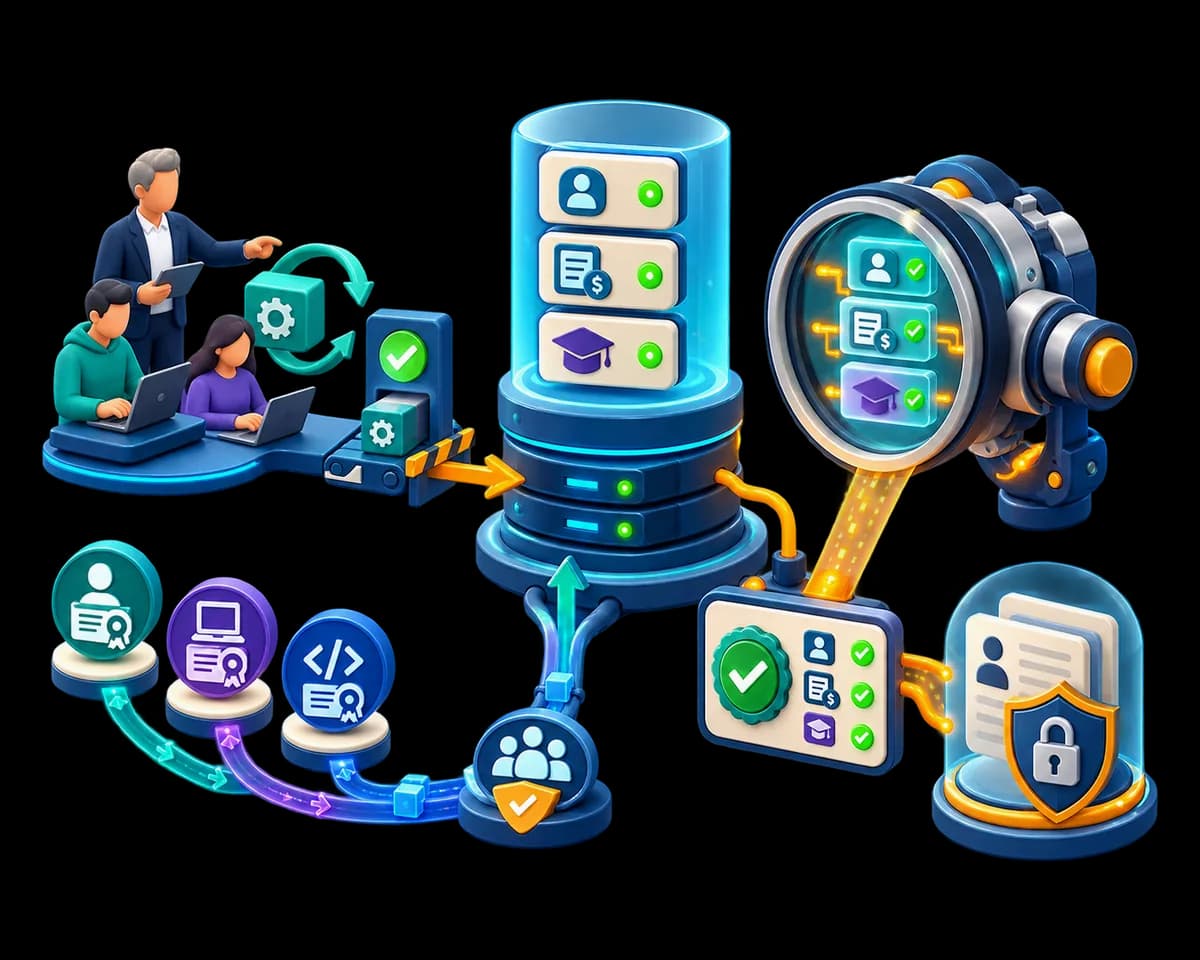
We build the software companies actually run on. HR systems, sales systems, stock and job costing, training platforms, phone apps and the websites in front of them.
We also put AI on the work where it genuinely helps, and we train small teams to run all of it.
What makes us different is not a method. It is that we do not start from nothing. What we sell is software that already runs here, fitted to your business. That is why a build takes four weeks rather than four months.
What we actually run
This is not a list of things we once shipped for somebody else.
HRKit runs our own HR. Our invoicing system sends our own invoices. The platform behind UpX delivers our own training, and signs people in through our own identity service.
We build our own products too, and both are live. Upfyn is an AI that does the work on your own computer. Orfyn is an AI engineer that runs on your own infrastructure, under your own keys. Our engineers use both on real client work, not on a slide. And the machine-readable layer we build for clients is running on this website — you can point your own AI assistant at it right now.
That matters for a simple reason. When we say something works, you can check it. Very little else on a consultancy website can be checked.
How we scope a project
A few things we settle before anyone commits. They are the ones that decide whether a project lands.
Where AI belongs, and where checks belong instead. Anything that has to be right every single time — payroll sums, tax, statutory filings — gets built with checks and human approval around it. We do not hand that decision to a machine, and we will explain why on the call.
What four weeks covers. A first working version, agreed in writing first. Large multi-year programmes, regulated work and moving data out of systems that cannot export it are all real jobs with their own dates. We put them in order rather than absorb them and explain a slipped date later.
Why nothing here carries a client's name. Every job is confidential by default, whether or not anyone asked. So work we have delivered gets described rather than displayed, including the parts we are proudest of. Your name would be protected the same way.
Who builds it
Our work is led by senior people, with a team we trained and assessed ourselves through UpX, our own learning platform.
That matters more than it sounds. Nobody joins a client project after a forty-five minute interview. They join after months of work we have marked, on the same systems we would be fitting for you. That tells you far more about someone than a conversation.
And because we are fitting software that already runs, rather than designing from scratch, the usual danger of a fast project is designed out. The hard decisions were made and tested long before your project starts.
The same programme is what we sell as corporate training. If you are a small company, you cannot outbid a big one for senior engineers. Hiring for potential still works. The problem is that nobody on your side has a spare afternoon to grow it. We run that part.
What we think is really happening with AI
Not that engineering jobs are about to vanish. What we see is the floor rising.
Tools now do more of the routine work. So doing only the routine parts is worth less. Judging whether the answer is right is worth a lot more.
That is a training problem before it is a technology problem. It is why AI work and training are the two things we are pushing hardest. Buying a system nobody in your company can judge is just buying a dependency.
How to check any of this
Book a call and bring one job that somebody does by hand. We will go through what could be automated, what should not be, and what it would take.
If the honest answer is that you do not need us, we will say that on the call.
Next step
Book a call
Pick a time that suits you — 30 minutes, free, no obligation. You get a straight answer on whether your idea is worth building, and if it is, a scope, a date and a number. If you would rather we rang you, leave your details instead.