
ERP systems
Delivered under client confidentialityYou know your stock figure is wrong. You just don't know by how much.
Stock, purchasing and job costing, built around your process rather than a vendor's.
The commercial shape of it
- Timeline
- 4 weeks to your first working version
- Cost
- The call is free; a scoping engagement follows, then the build is quoted against the scope it produces. The three steps and the figures
- Built for
- Manufacturing · Distribution and wholesale · Construction · Field services
What you get
- The one job you named, running on your own system
- Stock, purchasing and job costing set up your way
- The places stock goes missing, found and closed before you go live
- Your existing records moved across and checked
- Access levels that match who does what
- A record of who asked, who approved, and when
The room it happens in
Stock never quite matches the shelf, so you quote the next job from a number you do not trust. Job costs arrive after the job is done, which is bookkeeping, not running a business. And approvals live in somebody's memory, so nobody can say who agreed to what.
Any of this sound familiar?
- You find out a job lost money after it is finished.
- Stock on the screen and stock on the shelf are different numbers.
- Three departments keep three versions of the same order.
- Month end takes a week, and you still do not trust the total.
- Nobody can tell you what a job actually cost without opening five files.
If two or more of those are yours, this page is about you.
And you have quoted work off it anyway, because the alternative was to stop.
What it costs you
Profit you cannot see. The jobs that quietly lose money look exactly like the ones that make it. You find out at the end of the year, when it is too late to do anything.
Why now
Gartner expects a third of business software to have AI built in by 2028. In 2024 it was less than one in a hundred.
That changes what you are buying. The question is no longer which system has the most buttons. It is whether you can simply ask it a question. Most of what is sold to mid-sized manufacturers today cannot answer one.
What we do differently
We start with the one thing that hurts, and make it genuinely usable. Usually stock accuracy or job costing. It works on its own, alongside what you already run, before anything else arrives. The next piece is faster, because the base is already there.
You see what a job costs while it is still running. Not a report at the end of the month. The number as the work happens, so you can still do something about it.
Every approval leaves a record. Who asked, who decided, when, and what the state was at the time. It costs nothing extra to build, and it is the first thing anyone looks for when there is an argument.
Before any of that, we find the places stock moves without being written down. Most stock problems are not software problems. A system fed by a movement nobody recorded gives you confident wrong numbers, which is worse than none.
Ask it from your phone
You, on the shop floor: "What did job 2210 actually cost us?"
The system: ₹3.42 lakh, against a quote of ₹3.10. The extra is labour. 46 hours against 32 estimated.
You: "Which other open jobs are running over on labour?"
The system: Two. 2214 and 2219, both on the same line.
No screen, no export, no spreadsheet. And you found the pattern while you could still fix it.
How it works
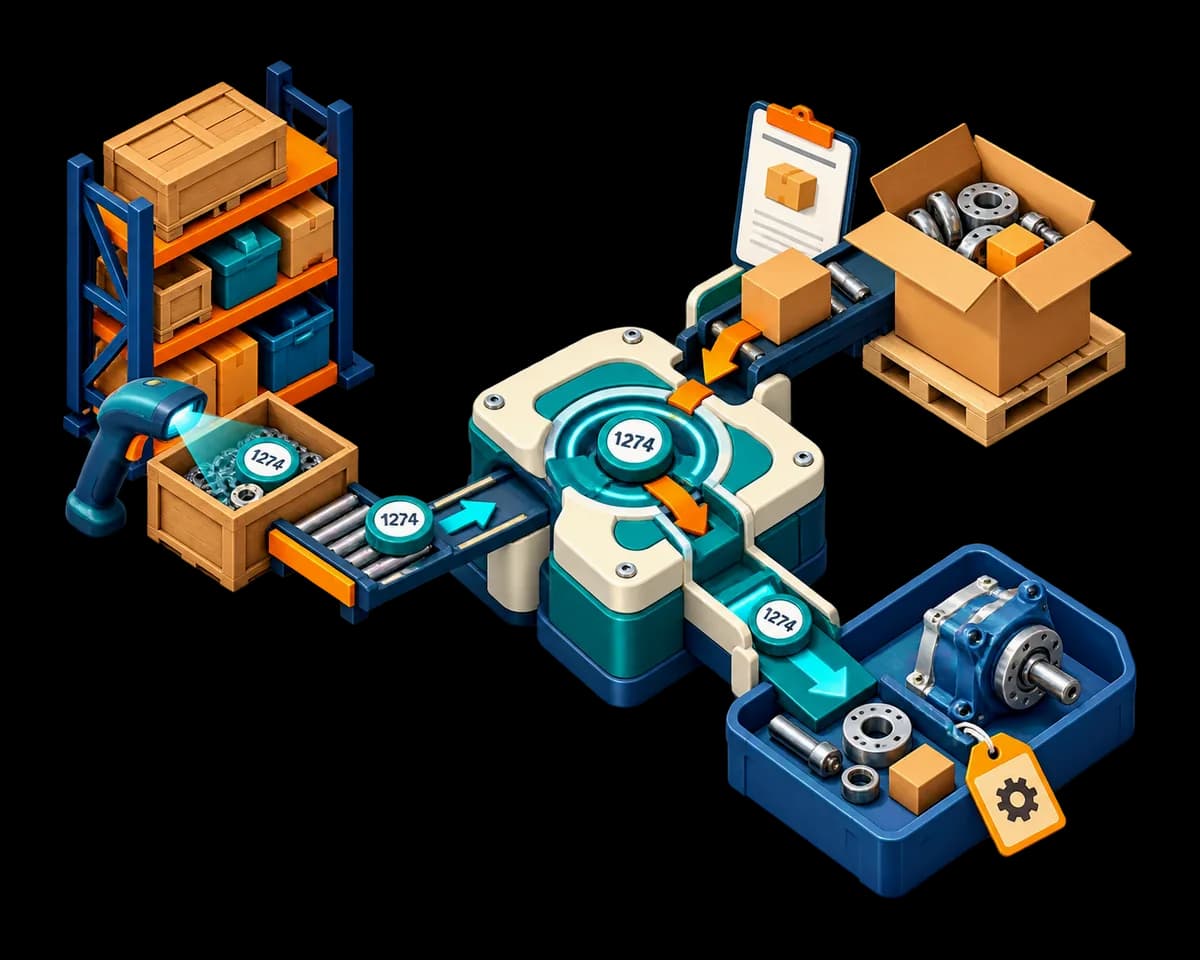
Find. The places stock and cost move without being recorded.
Build. The one job that hurts most, live and in real use.
Connect. Move your records across, and link up what you already run.
Extend. The next piece, faster, on the base that now exists.
What we guarantee
We have built ERP before. Those systems belong to the clients who paid for them, and they are covered by confidentiality. So this page tells you what we build rather than showing you someone else's business. What we carry from one job to the next is the design and the way we work, never anyone's data. That is what makes the second build faster than the first.
We agree what is included in writing before we start, and we agree it one piece at a time. Replacing a whole operation in one go is the shape that fails. Nothing is usable until all of it is, and the date moves twice. We will say so on the call and suggest an order instead.
We ask one question before quoting: can your current system export its data? It is the most common reason a date moves, and it is far better answered in week zero than in week ten. If the answer is no, getting the data out is its own job with its own date. We will price it that way rather than absorb it and explain later.
Four weeks covers a first working version, agreed in writing before we start. Very large programmes, work spanning many systems, and moving data out of software that cannot export it are all priced separately. Read what four weeks includes.
On every engagement
- You own it, and you can leave. Your code, your data, your accounts. Taking it in-house or to another supplier is a handover, not a negotiation.
- Built for India's DPDP Act. Identity kept separate from the consent and audit record, no personal data in URLs, and none in logs.
- Security enforced by the build. Secrets scanned on every commit, payloads size-checked before parsing, every write endpoint rate limited. If a check fails, nothing ships.
- Anything with AI in it is measured. An evaluation set, a human review step wherever a wrong answer costs money, and drift monitoring after go-live.
How we build, where your data lives, and exactly where we stand on certification — all of it is on our security page.
Asked and answered
We already use Tally, Zoho or spreadsheets. Do we throw them out?
How do we know the stock numbers will be right this time?
What happens when our process changes?
The other 11
Next step
Start with the one that hurts most
Bring the part of your operation that hurts most. On the call we go through what we would build first, what we would leave alone, and what has to be true before it works.