
HR management systems
Backed by a running systemSomeone is going to ask who approved that leave in March.
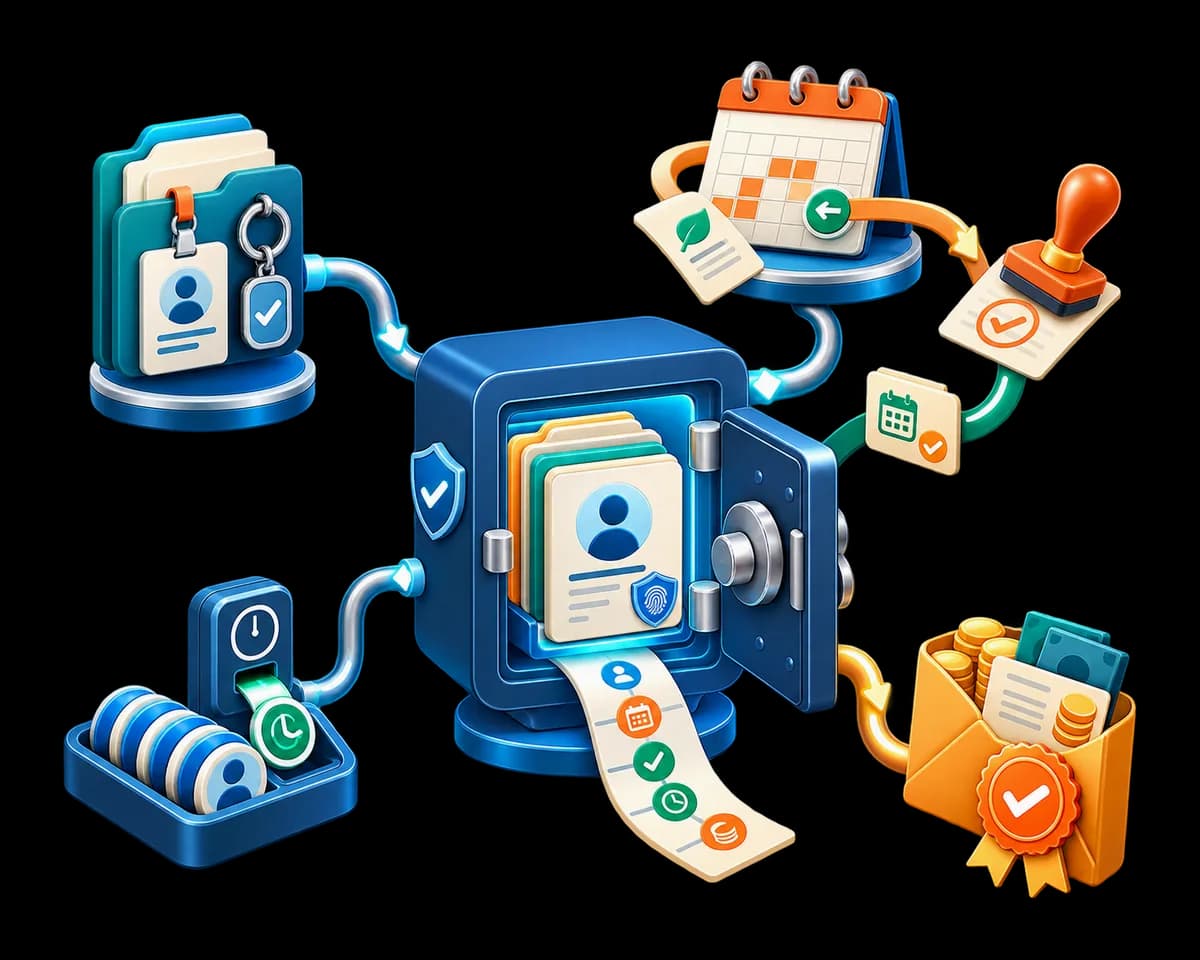
Joining, records, leave and payroll figures, built on a system that already runs our own HR.
The commercial shape of it
- Timeline
- 4 weeks to your first working version
- Cost
- The call is free; a scoping engagement follows, then the build is quoted against the scope it produces. The three steps and the figures
- Built for
- Professional services · Manufacturing · Education · Healthcare administration
- Runs today as
What you get
- Your HR running on your own system, with your branding
- Your teams, roles and approval chains set up
- A record of who asked, who approved, and when
- Your existing staff records moved across and checked
- Leave rules, holidays and carry-over set to your policy
- Payroll figures exported in your provider's format
The room it happens in
HR runs on a spreadsheet only one person fully understands, so when they are away, so is every answer. Approvals happen by email, so six months later nobody can say who agreed to what. And simple questions about headcount or leave take an afternoon, so most never get asked.
Any of this sound familiar?
- Leave is approved on WhatsApp and recorded nowhere.
- Payroll starts with someone chasing a spreadsheet.
- A simple headcount question takes an afternoon to answer.
- New joiners fill in the same details three times.
- You cannot prove who approved what, six months later.
If two or more of those are yours, this page is about you.
And the answer is going to sit in the mailbox of somebody who has left.
What it costs you
A number in your accounts that nobody can work out again. And a set of questions your leadership stopped asking, because the answers cost too much to get.
Why now
Looking at where AI is actually paying off, Forbes found a clear pattern. It is the back-office work, where the effort is highest and the return is most direct.
HR is the clearest example of that in most companies. It is not the exciting end of the business. But it is where the manual cost is highest, the same questions come up over and over, and the answers are easy to check. It pays back first.
What we do differently
Built on HRKit, which runs our own HR. The design is settled and already working before your project starts. So the four weeks goes into your teams, your policies and your data, not into arguing about what a staff record should contain. HRKit is open source, so you can read it before you commit to anything.
Every approval leaves a record. Who asked, who decided, when, and how things stood at the time. It costs nothing extra to build, and it is the first thing anyone reaches for during a dispute or an audit.
Leave liability becomes a question, not a project. Balances, carry-over and headcount are things you ask, not things you commission.
Ask it from your phone
You: "How much unused leave are we carrying in the Pune office?"
The system: ₹11.4 lakh across 34 people. Six are over the carry-over limit, and three of those have nothing booked.
You: "Tell their managers to plan it before the quarter ends."
The system: Three messages sent, recorded against your name.
That was a project last year. Now it is a question.
How it works
Load. Your data, in the running system, in week one.
Set up. Teams, roles, approvals, leave rules and carry-over.
Move. Your existing records, checked, with the odd ones flagged early rather than hidden.
Export. Payroll figures in your provider's format, on the day they need them.
What we guarantee
We look at your data quality in week one, not week four. Records kept in a spreadsheet for six years are usually messy. Three different date formats. A few leavers nobody marked as gone. At least one leave balance nobody can explain.
That is all normal. Finding it early is what protects the date.
We produce the figures your payroll provider needs, in their format, on their schedule. They keep the statutory calculations and filings. That is deliberate. It is work that has to be exactly right every time, and they do nothing else. The expensive, badly solved part of HR is everything that feeds payroll, and that is what we build.
Reviews and hiring are natural next steps, each with their own scope and date. We will plan them with you rather than promise them inside this one.
Four weeks covers a first working version, agreed in writing before we start. Very large programmes, work spanning many systems, and moving data out of software that cannot export it are all priced separately. Read what four weeks includes.
On every engagement
- You own it, and you can leave. Your code, your data, your accounts. Taking it in-house or to another supplier is a handover, not a negotiation.
- Built for India's DPDP Act. Identity kept separate from the consent and audit record, no personal data in URLs, and none in logs.
- Security enforced by the build. Secrets scanned on every commit, payloads size-checked before parsing, every write endpoint rate limited. If a check fails, nothing ships.
- Anything with AI in it is measured. An evaluation set, a human review step wherever a wrong answer costs money, and drift monitoring after go-live.
How we build, where your data lives, and exactly where we stand on certification — all of it is on our security page.
Asked and answered
Our records are a mess. Is that a problem?
Does this handle Indian statutory rules?
Who can see what?
The other 11
Next step
Start with the one that hurts most
Bring your leave policy and a short description of who approves what. On the call we go through what needs deciding before a build, and what your current records are probably hiding.